Category Archives: Uncategorized

Warning to Pawnbrokers.

At the Maidstone Police Court, on 27th June 1871, before the Mayor F. Pine and G. Edmett.  Martha White was charged with the theft of jewellery from a draper’s shop. Martha was charged with stealing two brooches, a pair of earrings, four rings and other articles from the shop of Messrs Paine and Durrant on 26th June. Angelina Pearce, an employee of Messrs Paine and Durrant, stated the prisoner was in the shop, at about 9 o’clock in the morning and again in the afternoon, between three and four o’clock. In the afternoon, she had asked to look at a brooch and was also showed some earrings, but she did not buy anything. Angelina saw the prisoner, had some earrings in her hand and informed Mr Roberts. She accused the prisoner of the theft and asked to look into her handkerchief. The handkerchief, fell onto the counter, containing brooches, earrings and rings, all the property of the shop. Mr Roberts corroborated the evidence and confirmed the contents of the handkerchief, and stated, he questioned the prisoner. Martha stated she had not intended to steal the jewellery. Mr Roberts unsatisfied with her reply, gave her into custody. Police Sergeant Froud, into whose custody the prisoner was given, stated that the prisoner had said she had not intended to steal the jewellery and wished to beg pardon from Mr Paine. Superintendent Gifford proved that after the prisoner was taken into custody, he found in her possession, a pawn ticket for a gold chain, pledged on 26th June for £1. Martha stated she was given the chain by a Mrs Brown, whose husband was a bricklayer in Wheeler Street, to pledge for her and she stated she got Mrs Smith to do it for her, and the ticket and money were given to her. He had communicated with Messrs Paine and Durrant, who confirmed the chain was their property. On visiting the prisoner’s house, in Wheeler Street, her father handed him, six pawn tickets, chiefly relating to clothing pledged but also one for a ring pledged at Miss Flinn’s for 4 shillings. Mrs Sarah Smith confirmed she had pawned the chain and John Tomlin, in the employ of Mr Corke in Bank Street, proved receiving it in pawn. Miss Fanny Flinn also deposed to lending the prisoner 4 shillings on a gold ring, and John Kennedy identified the ring and chain as similar to those of the prosecutors’.  Miss Funnell proved that Martha was also in the shop on the previous thursday and had looked at rings, but made no purchases. PS Froud stated he had made enquiries for the Mrs Brown, mentioned by the prisoner, but there was not a Mrs Brown married to a bricklayer in Wheeler Street. The prisoner entered into a long statement in her defence, still maintaining the chain had belonged to Mrs Brown and the ring she had purchased from a woman for 2 shillings 6d in the High Street, whilst looking at the Volunteers. She continued to deny any intention of stealing from shop, stating that another woman was looking at the jewel case, whilst she stood beside her, and the things lay on the counter, next to her handkerchief, she was committed for trial at the Borough Sessions. At the West Kent Quarter Sessions, Martha White was found guilty and sentenced to two months of hard labour. Messrs Paine and Durrant had not wished to press the charge as Martha was only 17 years of age, but as she had stolen from the shop on several occasions, a light sentence was given as a warning to her. Mr Smith for the prosecution, asked the Recorder to make an order for the restitution of the property from the pawn brokers to the prosecutors. Mr Corke had refused to give the pawned property to the police. The Recorder said the pawnbroker Mr Corke, had not taken sufficient care in the case. Mr Tomlyn, assistant to Mr Corke, said P.S. Froud had visited the shop and the property was produced, but it was the rule not to give up stolen goods, until the prisoner was convicted. They had always given every assistance to the police, when stolen property was pledged at their shop and he wished to make an application for the money 19 shillings 10 d lent on the chain and found on the prisoner, be refunded to Mr Corke. Mr Smith objected and quoted an Act of Parliament, which stated money could only be refunded to purchasers of stolen goods, but not to pawnbrokers who had taken goods in pledge. The Recorder made an order for both pawnbrokers to restore the stolen property to the prosecutors, but said he had no power to order the 19s 10d to be given to Mr Corke. He hoped the case would be a warning to all pawnbrokers.

Martha’s father applied to the magistrates for the return of the money found on his daughter. He had given her 22 shillings and 11 shillings to his son, to pay the rent with. His daughter went to Mr Baldwin’s their landlord, but had not paid the rent. He was sorry that his daughter has committed the robbery, but it was hard for him to lose his money. Superintendent Gifford said he found five or six shillings on Martha, in addition to the 19 s 10d, found with the pawn tickets. Her father was a hard working man and it appeared that money given to Martha for bills and been used for other purposes, unknown to her father. The Chairman said the 19s 10d could not be ordered to be given up, but her father could have the five or six shillings, with the consent of his daughter. Mr White thanked the Worships and withdrew from the Court.

©grimcrimesandunfortunateevents

Home

The sad death of an illegitimate child at Barham Court, Teston.

An inquest was held on the evening of 19th June 1890 in the parish room at Teston, by one of the County Coroners Mr T Buss, on the body of the illegitimate child of Ada Goodchild.  Ada Goodchild was a 20 year old domestic servant, employed by Captain Vansittart J.P. at Barham Court. Her, child was born on the morning of Monday 16th June, and died having lived only twelve hours from injuries sustained, after birth. After the appointment of Mr James William Penton as foreman of the jury, and the viewing of body of the child, which had been conveyed to the inquiry,  the Coroner, then proceeded to take  evidence from witnesses. The first witness Sarah Osmond, who was also in service to Captain Vansittart, as a scullery maid, stated she knew Ada Goodchild, and had shared a bedroom with her, since her arrival at Barham Court at the beginning of November. She had never noticed anything wrong with Ada and she had never complained to her, and she was unaware of Ada’s pregnancy. She stated the child was born on Monday morning and believed it to have been born between 10 and 11 o’clock.  On the day of the birth, Ada had complained of feeling ill, but had not said what was the matter with her, Sarah had left the bedroom at about half past six and returned at half past eight, when Ada stated she had a headache. When Sarah returned to the bedroom again at 11 o’clock, Ada was sat on the box, and when asked how she was feeling, she replied she was very bad and had given birth, she looked very ill and frightened, but did not say where the child was. Sarah went downstairs to tell the housekeeper Mrs MacDonald and leaving Ada, sat on the box. Mrs MacDonald went to the bedroom alone, and Sarah stated Ada had seemed very weak, when speaking to hear and was crying bitterly, but seemed quite rational. Ada had cried earlier in the morning, but Sarah had thought she was just unwell.

Mrs Catherine MacDonald, the housekeeper to Captain Vansittart, stated that she was in charge of Ada and the other servants and she had been in service to the Captain for three years, she was there when Ada was employed. Ada had never complained of illness, until the day, when the child was born and she had no reason to suspect, she was pregnant. She had worked without complaint, and had completed all her work up until the evening, prior to her confinement. On the morning, Sarah had informed her that Ada was unwell and wanted to stay in her room, until after breakfast, she went to her room and Ada told her, that her head was very bad, but she had not suspected anything was happening. She took her breakfast up to her room at 9 o’clock, and Ada had told her that she was feeling much better. After Sarah had told her of Ada’s confinement at 11 o’clock, she went to the bedroom and Ada was standing at the foot of the bed, when questioned, Ada had refused to speak. Catherine MacDonald, left the room and sent for Jane Bellingham.

Jane Bellingham, a married woman was working at Barham Court on the monday morning, when she was asked by Catherine MacDonald, to go up to see Ada in her bedroom. She told Catherine MacDonald, that a more experienced person, should be sent for. She however went to the bedroom, and on entering, heard a child crying. Ada was alone, and when asked where the child was, Ada had replied that it was in the box, meaning her clothes box. She left the child in the box until Mrs Diprose arrived, but she had not further questioned Ada as she was much depressed and crying. The lid of the box, containing the baby was closed.

Margaret Diprose, a married woman living in Teston, said she was not a certificated midwife, but had attended at many births. She was called to attend Barham Court and went to the bedroom of Ada Goodchild. She was informed of the circumstances and found the child in the box. She attended to the child and mother, she stated the child had been born regularly, but the child’s face was injured, she believed as a result of the box lid closing on it. The child was in a box, and the heavy lid of the box, had pressed against it. The mother Ada was not in a condition to attend to the child, as she had fainted. The child was getting weaker and Dr Fry was sent for by Captain Vansittart. She believed the child was born in the chamber.

Dr John William Fry, stated he was in practice at Wateringbury, and had been called to Barham Court, after having received a letter at his house. The letter from the mother of Mrs Vansittart, stated she was writing in the absence of her daughter, for him to attend at once to one of the maids, who had been confined. He went immediately and saw Ada comfortably in bed, with the child lying by her side. The child seemed fully developed and full grown. He ascertained Mrs Diprose was attending to them and gave some medicine and then left. He received a further letter in the evening from Captain Vansittart, expressing his regret, but that the child was very ill and could he come again to the house. He went immediately, but on entering the bedroom discovered the child was dead. Mrs Diprose showed him the injury to the child’s head and he stated he was unaware of the injury, when he had attended in the morning. He was informed of the day’s preceding events and at the Coroner’s instructions he had performed a post mortem examination. A large wound was found on the skull and scalp, the skull having been drive in. He had questioned Ada on the thursday morning, asking whether she was aware of the pregnancy, which she denied. He asked why she had not requested a doctor, to which she did not reply. He asked her to describe the birth and she stated, that she was in great pain, so she had got out of bed and sat on the chamber, and the child was born with considerable force into it. She then heard someone coming and so had picked up the child and put it, in her clothes box, which was half full with clothes. The lid had fallen down and she fainted.

The Coroner then questioned Dr Fry, asking if the internal organs of the child were healthy and whether the head injury was consistent with the statement, that the box lid had fallen on the child. Dr Fry confirmed that in his opinion, that the child was born healthy and the injuries were sustained after birth, from the box lid. As the box was half filled with clothes, there lid had pushed against the child’s skull and the scalp being very thin, a hemorrhage had occurred, and the resulting blood loss was the cause of death. The Coroner asked whether the child falling into the chamber, could have caused the injury, but Dr Fry believed the injury was sustained from the box lid. He said there were no other signs of violence on the child and he had seen nothing in the bedroom, which might have caused the injuries. He had attended to Ada, earlier in the year, when she was unwell, but was unaware of the pregnancy, at the time. Concluding Dr Fry, stated that he did not think Ada had any criminal motives and thought if she had intended to make away with the child, she would have not done so, in such a clumsy fashion.

Summing up, the Coroner said it was for the jury to return a verdict in accordance with the evidence. He thought the jury would agree with him, that Ada Goodchild was delivered of the child, surprisingly, and hearing someone coming, she on impulse, had placed the baby in her clothes box. He also thought they would agree that there was no intention of concealment and if she had intended that, he thought she would have put the child away in a different way. He did not consider a charge of murder was appropriate as to send a person for trial on that charge, there must be evidence of premeditated or secret plans. There might be some doubt in the jury’s minds as to a charge of manslaughter, but he thought that under the circumstances and bearing in mind, the state of the poor girl at the time, she had no intention of killing or causing the infant’s death. He therefore suggested a verdict of accidental death and although the final verdict was one for the jury, if there was a trial for manslaughter, he did not consider she would be convicted. The Foreman asked if Ada would be prosecuted for concealment, to which the Coroner replied, that it was a matter for the police to make further inquiries, and if evidence was found, it would be for the police to pursue. The jury recorded a verdict of accidental death and the inquiry terminated.

©grimcrimesandunfortunateevents

barham

Home

Fatal accident at the Willington Street Quarry

On the Sunday evening of 8th June 1856, a child named Harriett Cheeseman, aged seven, met her death, when she fell into a ragstone quarry in Willington Street. Harriet was the daughter of a carpenter, employed by the Earl of Romney. At the front of her father’s house in Willington Street was a quarry, at the edge of which she and other children were playing, at about half past seven. She was trying to catch another child Mary Phipps, when she fell fifteen feet into the quarry. Mary Phipps looked over the edge of the quarry and saw Harriett lying motionless at the bottom. Mr Thomas Parks, a turner of Maidstone, was passing along the road in a pony chaise, when he heard a cry from one of the girls, he immediately got down to the quarry and with a person named Smith, brought the child up.  Mr Parks, then drove for the surgeon Mr William Hoar, who returned with him in the chaise to the scene. Mr Hoar found her in a “state of insensibility” and her skull fractured. She died the following morning at 9 o’clock in the morning, without regaining consciousness.

An inquest was held before T. Kipping on 11th June at the Oak and Ivy Inn, Upper Stone Street, when the case was outlined and the jury returned a verdict of the cause of death as concussion, as a result of the fall. Mr Walker, the steward to the Earl of Romney, stated the Earl would have the site of the accident, securely railed.

©grimcrimesandunfortunateevents

The Tootell Murder at Maidstone 

The Tootell Murder at Maidstone  26 February 1904

“Indescribable is the feeling of consternation and horror which has overcome the people of Maidstone by the terrible tragedy enacted in their midst during the early hours of wednesday morning. The gloom which has overspread  the town at the close of last year by the sudden death of three of its foremost men has but partially passed away before the inhabitants have been horror stricken by an appalling event, compared with which any previous occurance in the domestic life of the borough pales into insignificance from its distressing effects.” This was the opening paragraph in the Kent & Sussex Courier on 26 February 1904, when reporting the triple murder and suicide that had taken place in the town on 24 February, Mr Charles Tootell, a respected gentleman of the town had  killed his wife and two daughters, and then committed suicide in the River Medway.
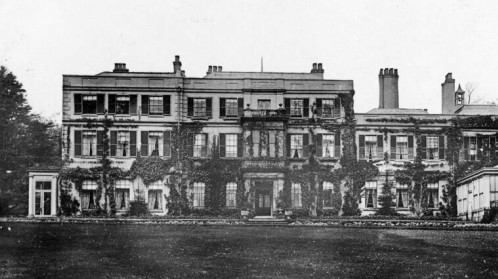
“When it first became known that in the town  during the early hours of the day that Mrs Christine Tootell and two of her daughters had been found dead in their house in London Road, lying in bed with their throats cut in a ghastly manner and that Mr Charles Tootell was missing, so incredible did such a horror seem to those who knew the family that they failed to give credence to the report and the illimitable possibilities of tragedy, seemed for a brief period to have been forgotten. They were, however swiftly brought to light in their bare nakedness by the alarming facts which became known in the afternoon.”At the time of the report, no one was able to attribute a motive for the unexpected triple murder and Charles Tootell was one of the last men thought to be capable of such a horrible crime. The report states he was of a genial disposition, shrewd, even-minded, self-possessed gentleman of more than usual ability, happy in his domestic relations. The junior of two brothers and partners in the oldest auctioneers’ firm in Maidstone, his father was Mayor of the borough.  After visiting the County Club, In Week Street on tuesday, he returned to his residence “Harestone”, situated at the corner of Bower Mount Road and London Road. In the evening his sister had dined with the family and Mr Tootell was in good spirits. Nothing during the evening had alarmed the servants and the exact time of the murder was unknown, however three members of the family were attacked, whilst sleeping, as they were found in their night gowns in their beds. The servants alerted Joseph Tootell in the morning, when the family failed to respond to a call to breakfast, and the bedroom doors were forced, discovering the horrific tragedy. As soon as the discovery was made, the whereabouts of Charles Tootell, become of concern. His dressing gown was found hanging behind a door and a blood stained razor was in a pocket. He had put on his clothes over a nightdress and  his overcoat, he had left a letter behind, which led to the dragging of the River Medway.  Irene Tootell, another daughter was a way at boarding school in Folkestone, so escaped the fate of her sisters. There did not seem to be a clear motive for the murders, the Kent and Sussex Courier of 26th February 1904 stated “Mr Tootell, who is 45 years of age, some years since underwent an operation for the removal of a bone in his head and we learn that as recently as Monday last, consulted Dr Strouts as to the condition of his nerves, which he stated were causing him some trouble.” The family had only recently moved into Harestone House and a considerable sum of money had been spent on altering and improving the property.  Harestone House was described as a fine mansion standing in its own grounds, and from it’s windows commanding a fine view of the surrounding  county. He was also under stress at work, having recently undertaken a reassessment of Maidstone for rating purposes for the Maidstone town council.

At the inquest, more details of the murders  were revealed; before the coroner Mr Tatham. The  inquiry was held to establish the cause of death of Mrs Christine Tootell, aged 45 and her two daughters Evelyn aged 20 and Audrey aged 13, who were all found in their beds with their throat cuts and Mr Charles Tootell aged 49, whose body was found in the River Medway. There was a crowded attendance at the Town Hall, with the Chief Constable Mr Mackintosh observing the proceedings on behalf of the police, and Mr Monckton representing  the family. Jospeh Tootell, brother of the deceased, identified the bodies and stated he had last seen his brother alive, on tuesday afternoon, at about half past four. He had shown no signs of ill health, however was not a strong man and had suffered from influenza. He had undertaken an operation for an abscess in his ear and a portion of bone had been removed, some years before. He had not shown any signs of weakness of intellect, but was irritable. The witness,  said he had been informed by the gardener at his brother’s house, that an incident had occurred at the house and he was told that the servants were unable to awaken their Master and Mistress, and he was asked to go to the house. He had entered Mrs Tootell’s bedroom, and found her deceased. The police and Doctor Gibb were summoned and it was subsequently found that the two daughters were also dead. Police Constable Hodges of the Maidstone Borough Force, stated he was called to the house and on entering the bedroom of Mrs Tootell, had found her lying on the bed, dead, with a large wound to her throat. The bed clothing appeared to have been thrown over her after death. No weapon was found in the room. In an adjoining room, he saw the body of Evelyn Tootell, and in another on the same floor, was Audrey Tootell. He made a search of the house and found a razor in the pocket of a dressing gown, belonging to Charles Tootell. His bed appeared to have been slept in. Inspector Waghorn gave evidence as to finding four razors, one of which was broken and bloodstained. A broken piece of razor was found in the throat of Audrey Tootell.  In each room, there was evidence of someone having washed their hands and the towels were blood stained. The condition of the rooms, in which the two daughters were found, indicated a struggle had taken place. In a room downstairs, a pair of blood stained slippers were found and a letter addressed to the sister of Charles Tootell, Letitia Tootell was found.  The letter stated “My dear Let, I have made a terrible mistake and I cannot face it. Forgive me. All I have is yours. Take care of my dear Irene. Get her away and try to forgive me. Let Bill (another brother in London) see to things. My mind is gone. I do not know what will happen.”

Ada Relf, a servant stated that on the tuesday evening, the family were all together and she had retired to bed at ten o’clock. With the exception of the two daughters, the family had not retired to bed until later. She had not heard any quarrelling or any disturbance, during the night. In the morning, it was the custom for her to take tea to Mr Tootell, at seven o’clock. She had knocked at his door and placed the tea tray on the mat outside. She later found the tea, had not been taken in and was informed by another servant, that neither Mr or Mrs Tootell were awake. She went to Evelyn’s room and found the room disarranged and Evelyn lying on the bed. She informed the gardener and he returned to the house with her. The gardener had entered the bedroom, and quickly left, stating “I must go for help”.  Joseph Tootell, Letitia Tootell, the police and Dr Gibb were summoned. The gardener Eiwen Haisman stated he had entered Mrs Tootell’s bedroom and saw blood on the pillow and felt a body under the coverlet. He had informed Joseph and Letitia Tootell and then fetched the police and doctor.

Dr Gibb stated that on arrival at the house, he found Mrs Tootell in bed with a blood clot on the side and wound in her throat, the wound, in his opinion having been inflicted by a razor. Death in his opinion had occurred five hours, prior to him examining the body.  Mrs Tootell’s hands were clasped and blood stained and there was no evidence of a struggle. The wound was a terrible injury and would have resulted in almost instantaneous death. He described finding the bodies of the daughters, Evelyn’s hand was jammed between the bars of the bed and her throat cut, from ear to ear, severed to the vertebrae, the wound inflicted with great force, Audrey’s throat was cut in a similar manner and there was evidence of a great deal of struggling, in both cases. Evidence was given in the case of Charles Tootell.  Joseph Tootell identified his brother’s body, whom he had last seen on the tuesday afternoon, he stated Charles had no business worries, and had just completed a valuation of the parish and but had complained of overwork. His books were straight and he was not in any financial difficulty and his relationship with his wife was satisfactory.  Police Constable Westfield, said he found a fully loaded six chambered revolver  in on of the pockets of Mr Tootell’s clothing, after his body was recovered from the river Medway. He had no collar on and was wearing patent leather slippers.  Dr Strouts stated Mr Tootell had complained of sleeplessness and appeared to be worrying himself, somewhat. He gave no indication of having any fear of any serious trouble. Dr Johnson, who examined the body, said the death was the result of suffocation and he had made an examination of the ears, and found no sign of disease or anything affecting the brain to cause derangement.  Dr Gibb said in his opinion, Mr Tootell was in a subconscious state when he committed the act, but then recovered and having recalled what he had done,  written the letter and then committed  suicide.

The Coroner, in summing up, commented on the sad nature of the case, and the jury returned a verdict of wilful murder against Charles Tootell in the case of his wife and two daughters and found that he had committed suicide, whilst temporarily insane.

On the day of the funeral, snow was falling as four hearses conveyed the bodies from Harestone House, direct to the Maidstone cemetery. The streets were thronged with mourners and at the cemetery gates, the officers of the Borough police guarded the entrance, the public being excluded from the cemetery. Charles Tootell and his wife Christine were laid to rest in one grave, whilst the daughters were laid side by side, in another grave. Each coffin was of polished oak with brass furniture, each with inscriptions of their names and date of death. The mourners were Joseph Tootell, Rev J Tootell, Percy Tootell, William Tootell (brothers of the deceased, Mr George Haynes (brother in law of Mrs Tootell), George and B.W. Haynes (nephews of Mrs Tootell) Mr T Green (business partner), Walter and Herbert Secretan (brothers of Mrs Tootell) Members of the Trustees of the Poor, together with the Clerk, were also present at the graveside. There were many floral tributes and amongst them a cross from the last remaining daughter Irene, which bore the inscription “In loving memory of my Darling Mother, Father, Evelyn and little Johnny (the family’s pet name for Audrey Tootell).”

The surviving daughter Irene was living with her aunt Letitia Tootell in Ramsgate in 1911, the family living on ‘private means’.  Charles Tootell’s  estate of £9041 4s 1d was left to his brother Joseph Tootell and his wife Christine’s estate of £735, 1s 8d was also left to Joseph Tootell, so he may have been the source of income for the ‘private means’  of Letitia and his niece Irene. In 1916,  Irene married Julius Tindall Pynn at Christ Church, Hougham. Julius Tindall Pynn, was the son of Montagu Charles Lamb Pynn.

©grimcrimesandunfortunateevents
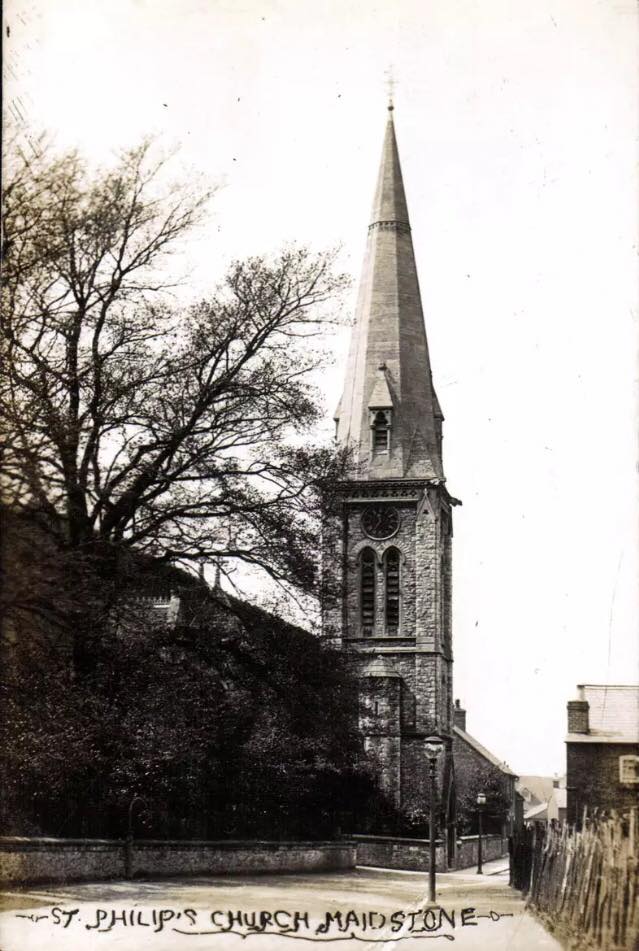
Tragic death at St Philip’s National School

Death at St Philip’s National school, Maidstone 1862
On Thursday 4th September 1862, Mercy Froud was fatally injured at St Phillip’s National School; when she become entrapped in a sash window at the school. The Maidstone Telegraph and the Maidstone Journal reported that between the hours of one and two o’clock, when the school building was locked for the dinner hour, Mercy had gained access to the school, by climbing through a small sash window. It was suggested she had returned to school, to fetch a wooden whistle, she had left behind. But on leaving the school room, through a larger unweighted sash window, it fell, entrapping Mercy by her neck and she was suffocated. The window sill was about five feet from the ground.
At the Coroner’s inquest held in the school room, the school mistress Mary Porter, of Richmond Cottage, Kingsley Estate, stated Mercy had stayed at school to 12.15 with some other pupils, including her two nieces. They left the school all together, and parted company at the corner of Waterloo Street. Mercy has asked to sweep the school in the evening, but was told, that other children had already been paid to sweep and it was not her turn.
Another witness Mary King, of Bristow’s yard stated she was taking her sister Jane to school, at 1.45pm and finding the school yard locked, they had peered through the keyhole and saw Mercy hanging from the window, they went to fetch the key from another teacher Susanna Lincoln and informed her. Arriving back at the school gate, they had peered through the keyhole again and seeing Mercy still hanging from the window, they then ran home, in fear. She had later seen Mercy’s body taken away.
Susanna Lincoln, stated she had locked the school door and yard gate, when Mary Porter had left the school, and no children were left in the school. She stated children frequently brought their dinners to the school and are locked in the school yard or if wet, allowed in the school room and she then stayed until Mary Porter returned. She was also aware that children, gained access to the school yard; through Mrs Cornish’s premises and had seen girls climb through the sash windows of the school.
Witness Simon Callow who had been passing by the school, was resting his horses at the school gate, when his mate had called out to him, having peered through the gate, they saw the child hanging from the window. A person came with a key and he went in and helped remove Mercy from the window. He stated the window was heavy to lift and it took two or three attempts to raise it and release Mercy. Another witness, Ann Bailey stated she had seen the body at the window, but took no notice as children were often seen playing at the window.
Another child Jane Chittenden, who lived with her father Henry Chittenden, a shoemaker, had agreed to meet Mercy at the school, that evening and Mercy had told her, that if the school door was locked, she would open a window to gain entry. She stated children often gained access to the school yard, when locked by climbing over the gate of Mrs Cornish’s house which backed onto the school yard.
John Froud, Mercy’s father stated he had not seen his child alive on the day and that his daughter was 7 years and ten months of age. On the 1861 census, the family were living at 3 Langley Row, Stone Street, Maidstone and Mercy was one of five children. John Froud’s occupation is listed as bricklayer.
Mercy’s mother Sarah stated that her daughter had left for school at nine o’clock and had not returned home for lunch that day and had not taken her dinner to school, but was sometimes late as she played out. She had not see her daughter again until her body was taken to their home. Mrs Froud, after the verdict, expressed her dissatisfaction and stated her daughter had been locked in for punishment, and had been killed as a result of trying to escape, and mentioned that two children had given statements to that effect. The coroner stated any further evidence would be considered and the children were sent for, but they had not been at school on the day and denied any knowledge of the events of the day. The teachers were cleared of any blame by the Coroner and the jury. Dr Powers M.D. proved the deceased’s death was caused by the pressing of the window on her neck and the pressure was violent and death instantaneous, the verdict “Accidental death from suffocation, caused by the falling of a window.”


stphilips

St Philip’s Church, Maidstone ©grimcrimesandunfortunateevents

Sad fatality at Maidstone Grammar School

The Sad fatality at Maidstone Grammar School.The Maidstone and Kentish Journal of 8th November 1894 reported the sad accident at Maidstone Grammar School, resulting in the death of a pupil Percy Le Clair Hills, the son of a local councillor Edward Hills. Percy was the oldest of three brothers, who attended the Maidstone Grammar School. Every year, the school held a small firework demonstration in commemoration of the attempt to blow up the Houses of Parliament, at which every boy between the ages of 14 and 15 years were given an allotted number of fireworks. On Monday 5th November 1894, parents, scholars and friends assembled on the school playground and a fire was lit just after seven o’clock in the evening and fireworks followed. Just before eight o’clock, a pupil was seen running around the grounds, shouting, the pupil Percy Hills ran into a wall and the seriousness of his situation, soon realised. The pupil had lighted fireworks playing into his face and neck. The headmaster Rev H A Watson and other masters attended to Percy, and due to the seriousness of his burns, he soon lost unconsciousness. Four doctors Drs Monckton, Hoar, Plumley and Shaw were in attendance and it was soon observed, Percy’s condition was precarious, having sustained severe burns to his chest, throat and neck, and he died, later the same evening.
At the Coroner’s inquest before the Borough Coroner Richard Turner Tatham, the Rev H A Watson proceeded to explain the circumstances of the accident. explaining that it had been a custom for years to have a celebration at the school. Each boy was given a number of fireworks, but there were regulations as to letting them off, one being that none should be discharged before a given signal, by the firing of a rocket, and another that none should be discharged towards the visitors. Witnesses had seen Percy running and shrieking, but had thought he was excited but soon discovered that it was through fear. The boy was caught and a coat thrown over him, when the coat was removed Percy was unconscious. He was taken into the school house, where he was attended by a trained nurse and four doctors. James Charles McVitie, another pupil, said he was present at the school and observed Percy light a Roman candle, which he pinched as if trying to extinguish and then put in his back pocket. He afterwards saw him, run and shriek. Albert Epps, another pupil stated he had seen another pupil running in front of Percy, with a firework and he saw sparks fall on his coat and saw the fireworks alight. Mr Aird had caught Percy and threw his own coat round him, he afterwards discovered there were fireworks burning him and unrolled him. Dr Ground praised the kindness of the headmaster and those who had attended to Percy, and stated nothing more could have been done for him. Percy never regained consciousness and his cause of death was stated as pneumonia and cerebral effusion on the membrane of the brain. Summing up, the Coroner Mr Tatham commented at the sadness of the death and “it was not for him to say, whether it was wise for boys of the deceased age to have fireworks; this was a question they were not there to try. Boys, of course, would be boys, and he supposed they would forever have fireworks, and as long as there were fireworks, there could be accidents. In the present case he thought no one was to blame, not even the poor little chap himself. He (Mr Tatham) knew him very well and was fond of him. He thought there could be no other verdict than that of an accidental one.” The funeral cortege for Percy Le Clair Hills, from his home “Lenworth”, at Ashford Road, consisted of an open car, bearing the coffin, which was covered with floral emblems was followed by five mourning carriages. The first part of the service was conducted at All Saints Church with family, councillors and pupils from the Grammar school in attendance. The grammar school boys then followed the deceased to the cemetery, where the Rev Watson and his former master S Priestly officiated at the graveside. Numerous wreaths were placed on the grave, including a wreath of violet and orange chrysanthemums from the Grammar school, the school colours, with the deceased’s cap in the centre, were placed at the head of the coffin.
Two years prior to his death, in May 1892 Percy Le Clair Hills had been awarded the Old Boys’ scholarship for Modern Languages at the Maidstone Grammar school. Following his death, a fund was raised; subscribed to by the pupils and masters of the school to commemorate his memory , a year later a stained glass window and brass plate were installed in the school hall in the presence of his relatives, masters and pupils. The stained glass window depicted a biblical scene from Samuel, when read “Speak, Lord, for thy servant heareth” The school hall at the school’s  previous Tonbridge Road site, no longer exists.

©grimcrimesandunfortunateevents

St Faiths, Maidstone

Home

The area known as St Faiths, in Maidstone was an area, where some of the poorest residents of the county town resided, some of my own family lived in houses on St Faith’s Green during the 1850’s. The following is  extracted from the Maidstone and Kentish Journal of 25 January 1894, and gives an insight into a time, long forgotten.
Nooks and Corners of Old Maidstone – St Faiths Street
I must confess that the street known by the above named ancient title, is not one of the most attractive in the good old county town, and were it not for the time honoured building of Chillington Manor House, with its glorious library, its invaluable museum treasures and contiguous public gardens would be decidedly the shabbiest of the shabby. Many of the old houses have been demolished and in their stead stand miserable-looking coal and other stores and a comminglement of wretchedly built, and ill favoured modern cottages. Many of the ancient glories of the street, have escaped, however the ruthless hand of the vandalistic iconoclast, and peering here and there from the midst of ungainly neighbours, can be seen on the right going towards the flowing Medway gabled structures, which be speak the grandeur of better days. These houses stand up from the road, upon an elevation, access to which is gained by steps of somewhat dangerous precipitousness. The street ends with the open rive, which here laves the roadway with soft and musical murmuring sound. Facing the musem gardens are six solidly built, and picturesque almshouses, erected by the munificence of Sir John Banks, in the year 1769, in which six poor aged men and women, find a comfortable shelter, and a solatium of £10 yearly.
In the days which have long since departed the locality of St. Faith’s, from what can be gleaned from the local records, was, although in the town, a kind of village in itself. It possessed a historic green, upon which sports and pastimes were indulged in and where the youth met to find judicious exhiliration and recreation. it had, too, a venerated fane in its famed chapel, which was erected in the 13th century.
From what can be gained of its history it appears that early in the 16th century it was annexed to the College of All Saints, and when that organisation was dissolved it was purchased by the Corporation, the property being described in the first charter as one chapel and one church yard, or piece of land commonly called St Faith’s churchyard.
Mr Russell, in his excellently compiled History of Maidstone, states the property was afterwards sold by the town to Peter Maplesden, of Dijons, with a reserve to the parishioners of liberty to hold Divine service in a part of the chapel, and to use the churchyard for burials. It passed in 1561 into the hands of Nicholas Barham, of Chillington House, and in 1572 the Corporation granted the use of the chapel and yard to the Dutch refugees, who had settled in the town. Barham’s son Arthur sold the property in 1609 to Henry Hall, and the latter devised it to his grandson George, who in 1624 disputed the rights of the Corporation. In the following year they made an order that householders and their families who for their poverty be not assessed to the poor” were to be buried in St. Faith’s yard. The order, however was not carried out, and Hall would appear to have relinquished his contention as far at least as regards the Dutch people, who continued to hold their services in the chapel until 1634, when it was closed by the Archbishop Laud. It was opened again in 1646, and for the next 90 years, with little interval, was used by different bodies of Non conformists. For some years it was used as a ladies’ boarding school, and subsequently was utilised as a storehouse for the West Kent Militia. It was pulled down in 1858. All that remains of its destruction are two pillars, with the capitols and bases, These are now to be seen in the garden at the back of the Museum. Relics of the old chapel are preserved in prints of the period.
Anent the Dutch settlers, who figure so prominently in the history of the chapel, it may be mentioned that the Walloons or French speaking Flemings, migrated to England to escape religious persecution, and a body of these made a settlement in Maidstone in the reign of Good Queen Bess in the year 1573, The Corporation granted them the use of the old Chapel of St. Faith and the burial ground, and history shows that they were the first Nonconformists who, as a body worshipped in the county town. Archbishop Laud endeavoured to impose certain restrictons upon them. These were resisted, but it was not until the Commonwealth that their old liberties were restored to them. The present handsome church, with its noble and commanding tower, was erected in 1871 on the site of the old chapel, and is by far one of the finest specimens of the ecclesiastical district churches of the town. It was consecrated in September, 1872, and is an excellent specimen of the early English decorated style, and is dedicated to St. Faith, Virgin Martyr. Its sittings number over 600, and they are all free and unappropriated.
Before the building of the church, and the opening of the garden, the locale had sunk to a very low standard, being a nest of rookeries, foremost in which figured an alley, known as that of Bone. This was the favourite abode of chimney sweeps, men of uncertain calling and peripatetic vendors of edible comestibles. The London, Chatham and Dover Railway have opened up the Station-road, and now the green and all pertaining to it have passed into the limbo of the forgotten and unregrettable.
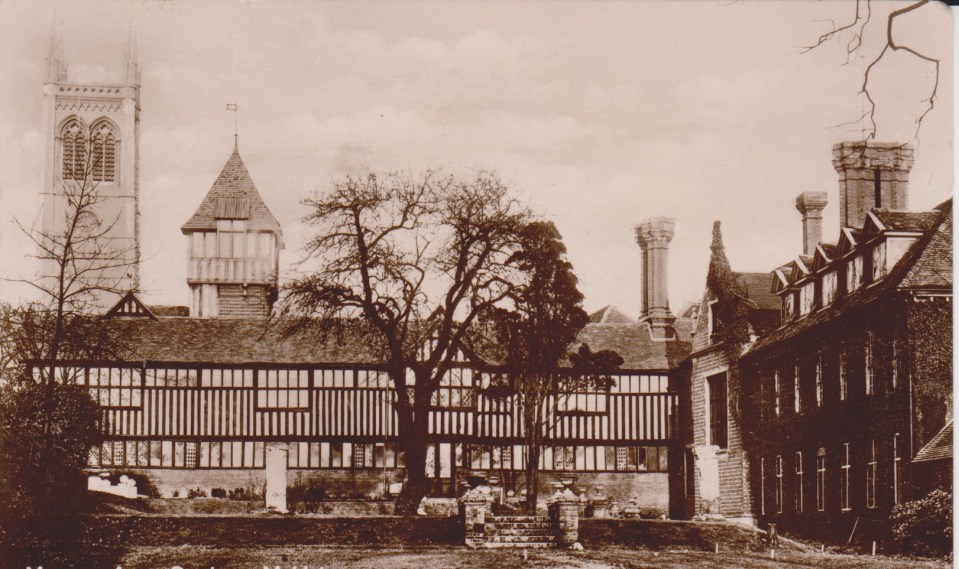
The main object of antiquarian interest in this quaintly complex locality is the Chillington Manor House, which is in a rare condition of intact preservedness. The entrance porch, the common hall and the cloister connecting the chapel with the building, are splendid specimens of the Mansoria l Architecture of the Elizabethan period, The structure dates from 1560, but there is reason to believe that a prior building existed on the site during the reigns of Henry the Seventh and Eighth. During the reign of Elisabeth, the Manor of Chillington and the mansion were sold by Robert and Geo. Maplesden for £500 to Nicholas Barham. Afterwards it passed to the Hall family, and by a succession of changes in 1801, it become the property of Mr William Charles, a medical man, at whose death in 1832 it descended to his sons William and Thomas. The last named bequeathed his valuable collection of antiquities to the town, thus forming the basis of the present magnificent museum. In course of time the Corporation purchased the Museum and adjoining garden.
In the year 1858 Mr Edward Pretty, an old scientific friend of Thomas Charles, was appointed curator of the Museum, and right lovingly did he carry out his duties. He died in 1865, and bequeathed his fine library, antiquities and pencil and water colour sketches, the result of his own labours, to the Museum. He was succeeded by another enthusiastic curator, namely, Mr Wm Lightfoot, during whose term of office the east and west wings were added to the building through the public spirited generosity of the late Alexander Randall, Samuel and Richard Mercer, and Julius Brenchley. The most recent addition to the building is the Bentliff wing, erected in 1890, as in memoriam to the late Mr George Bentlif, and which serves the purposes of an art gallery and reference library.
Facing the old green and chapel are now the schools of St. Faith, and the commanding premises of the Maidstone and Kentish Journal and the Kent County Standard. The features of the past St. Faith, now for the part live only in historic records, but their memories will long be recalled, and as affording interesting musings for the antiquarians, the nook and corner will often be reverently visited.

Scan_20180528

 Maidstone Museum and St Faith’s Church ©grimcrimesandunfortunateevents