The South Eastern Gazette of 12th December 1854, reported the suicide of Elizabeth Birch, aged 29, the daughter of Samuel Birch, a grocer of King Street on 10th December 1854. Her death, the result of taking three ounces of laudanum, procured from a bottle in her father’s shop, where the drugs were sold. The Gazette described Elizabeth as having been “addicted to dissolute habits for some time.” The inquest which was held on 12th December at the Royal Oak Inn, before the coroner T. Kipping.
The first witness James Thornington, a farm baliff living at Grove Court, King Street (which was situated at the back of the house of the deceased) stated that on returning home on the evening of saturday 9th December, the deceased was in his home and had been sleeping there during the week. He described her as looking “very strange and crying bitterly, claiming that her father would imprison her, for robbing him. He stated that he told her, that he would go to her father and endeavour to induce her father, to alter his intention. He however did not visit Samuel Birch, that evening. That same evening at about eight o’clock, Sergeant Hills took a summons to Samuel Birch’s house, and James Thornington’s wife informed Elizabeth Birch, of the summons. Elizabeth cried bitterly and could not be pacified, and stated she wanted to go out, with the intention of drowning herself. James Thornington, however, prevented her from leaving. On the Sunday morning, she was still in a distressed state and begged James to go to her father, which he immediately did, at about half past ten. After he had been talking to Samuel Birch, for about five minutes, Elizabeth entered the house. Her father Samuel said to her “You are a pretty creature, ain’t you, to bring me to poverty in my old days.” Elizabeth expressed her sorrow for what had occurred, but said if her father would forgive her, she would get the things back, as soon as possible. Elizabeth, then went into the shop, to where the medicine bottles were placed. She then went upstairs, to come down again and return to the shop. During this time, James was trying to persuade her father Samuel, to forgive her. James then heard some bottles rattle, and immediately ran to where Elizabeth was at the counter, on which she had put a glass. James asked her “Betsy, what you done?” She took him to the corner, where the bottles were placed and pointed to one, containing laudanum and a glass, which had been filled. He gave an alarm, and Samuel Birch ran into the street and meet Dr Power, who came in. James further stated that Elizabeth had told him on the saturday, that she had pledged her father’s things, a great many times, including his watch and could not get it back and that she owed Mrs Budgen of Paradise Row, £4, 19s 6d. He had never seen Elizabeth, the worse for liquor and did not think, she was inclined to drink. She pledged her father’s belongings, to screen the faults of her sister, who was a habitual drinker. She had borrowed money from Mrs Budgen, to redeem her father’s articles from the pawnbrokers, which she has pledged to pay her sister’s debts, she pledged the things on Monday morning and was to redeem them on the following saturday, for her father’s use on Sunday.
The witness Doctor Power stated he was passing the deceased’s house at about quarter to eleven on the sunday morning, when he was told by Samuel Birch, that his daughter had taken laudanum. He found her sitting in a chair and asked her, what she had done. She said she had taken a glassful of laudanum, which she obtained from her father’s shop. Doctor Power was surprised to find the laudanum for sale in the shop. She said her father had taken a summons out against her, and she was afraid, she would go to prison.
Doctor Power administered a mustard emetic and procured a stomach pump from his surgery, after the use of which, the deceased become comatosed. Doctor Power stated, that with his assistant, they had applied stimulants, friction to the chest and other parts, and she was shaken with the assistance of the police. She was also pricked with needles, at the back of the neck, and they resorted to various other means to revive her, but she sank into a state of torpor, which continued to her death, the same afternoon. The glass in which she took the laudanum held four ounces and there was no doubt that it was the cause of her death, causing congestion of the vessels of the brain. Dr Power had attended to the family for twenty years, and he had never thought her of unsound mind. In conclusion, Mr Power stated that he wished to call the attention of the jury to the great impropriety and danger in allowing persons to sell poisons, the deadly nature of which, they were unaware of, in such small shops. In Samuel Birch’s shop, there were a number of deadly poisons, the bottle of laudanum produced at the inquest, was marked 4d per ounce, which quantity was sufficient to kill any person and it was evident that any one could obtain it, by the payment of 4d. Poisons given to infants, sold at such sheps, in the smallest quantities would often result in death.
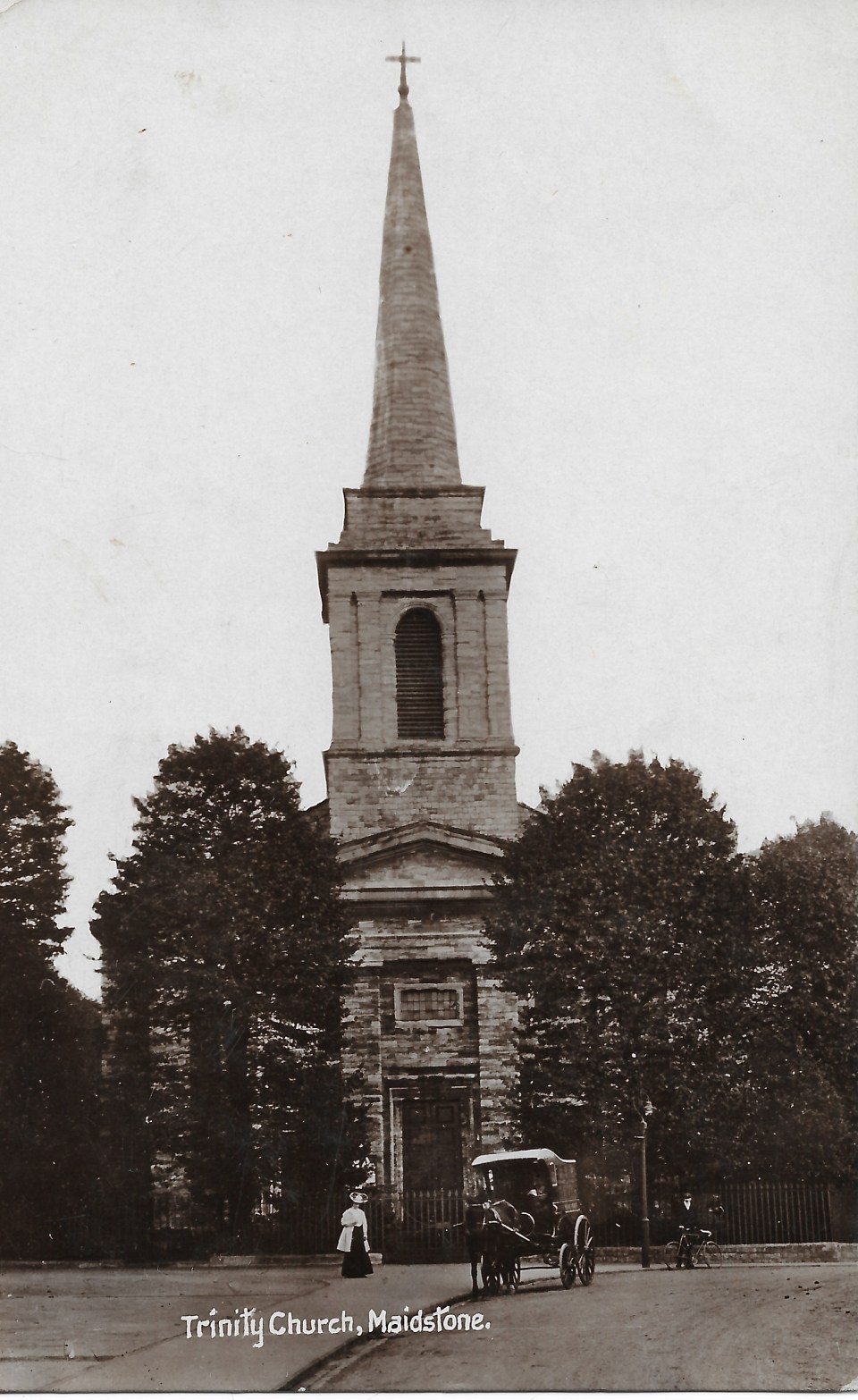
The coroner in summing up, said there was no doubt as to the cause of death and the only point to consider was her state of mind. The only evidence to be considered was that of James Thornington, and if necessary, he could call the father. With respect to the advice of Dr Power, he observed there was no law to prevent persons selling poisons, with the exception of arsenic. The jury returned a verdict of “That the deceased destroyed herself by taking laudanum, while in a state of temporary insasnity” at the same time expressing their opinion that every means ought to be taken to prevent the sale of poisons by parties, unacquainted with their nature. Elizabeth was buried in the Holy Trinity church, on 15th December 1854.
A further tragedy followed on 22nd January 1855, when Samuel Birch’s wife Elizabeth also committed suicide. Samuel Birch was now in debt and the Mayor and other gentlemen were hopeful that they could re-establish Samuel in business, and were about to set a subscription, first obtaining a release of his debt from the creditors, who he owed money to. However one creditor refused to release Samuel from his debt and the subscription was not proceeded with, as it was deemed unadvisable to raise money for a creditor, who threatened to take proceedings to recover his debt. In consequence of their forlorn circumstances, Mrs Birch committed suicide. On the day in question, Mr and Mrs Birch had breakfasted together, when at about ten minutes past ten, Samuel left the room for a short time and on his return, he saw his wife coming down the stairs, holding her apron to her throat, from which blood was streaming, she twice exclaimed “Lord have mercy upon me!”. Mr Birch, immediately ran across the road to fetch the surgeon Mr Allwork and his assistant. A fearful gash was found in her throat, entirely severing her windpipe, the wound inflicted by a large carving knife. She had stood in front of a looking glass to inflict the wound, and held her head over a commode, allowing the blood to flow into it. At the inquest, Samuel Birch stated that his wife had frequently of late, talked about Mr Fulljames, saying what a bad man, he was and talked during the week of their money problems. Samuel Birch had told Mr Fulljames, that he would be the death of his wife. She had attended the Trinity Church on Sunday afternoon with him and seemed much better in spirits, than previous days, but on the Monday morning, she had spoken again to Samuel, of their difficulties. On the previous thursday, Mr Fulljames sent for Samuel Birch, and told him he wanted £10 or he would sue him for the debt and costs. Samuel told him, that he has seen the Mayor and Mr Austin, respecting his affairs, but again Mr Fulljames repeated his former demands. Mr Fulljames had put an order into the house before and it was in force, when his daughter committed suicide and his goods were being lotted. He had told his wife of Mr Fulljames’ demands and his wife was upset. She often said Mr Fulljames was a very bad man and she also spoke of her daughter Mary in prison. On the Sunday afternoon, they had taken tea with a relative Mr Foreman, again after which she spoke of their troubles, several times, she wanted Samuel to go to Mr Fulljames on Monday morning, respecting his debt and the threatened order, but he told her, it was of no use, going to him again, as he had been several times, before.
The witness Mr Allwork, surgeon, stated that he attended Mrs Birch and on entering the house, found her in a back bedroom, on the bed with a severe throat wound, she was apparently speechless and gasping for breath. He found the windpipe, nearly divided, but the principal arteries had been missed. It was evident, that she was suffering from suffocation, in consequence of the blood having passed down the windpipe. He passed a tube down the windpipe, through which she was enabled to breathe with some temporary relief. Dr Power then arrived and everything was done to save her life, but she died about half an hour, later. A carving knife covered with blood was on the drawers and he has no doubt, she inflicted the wound, before the looking glass and went to the commode and held her head over. The looking glass was sprinkled with blood and there was a large quantity in the commode.
Sergeant Hills stated that he went to the house and confirmed the evidence of Mr Allwork, he also examined the stairs and found a few drops of blood on them, and on the cellar door below, he found a bloody hand print. There were other marks on the door and he had no doubt, that the deceased committed the act.
The coroner stated that he thought there was no doubt from the evidence, who had inflicted the wound and only other point was the condition of her mind at the time. Looking at the circumstances of the family; a daughter having recently committed suicide, another daughter in the gaol for misconduct, and the proceedings about to be taken, it was not surprising that such an accumulation of misery should have unsettled the mind of the deceased and the jury returned a verdict of temporary insanity. Elizabeth Birch was also buried at the Holy Trinty church yard on 28th January 1855.
The Maidstone Journal acknowledged the kindness, of all the creditors, especially Charles Arckoll, the largest debt of all the creditors, who was one of the first to express his willingness to release the unfortunate Samuel Birch, from his debt and Samuel publicly expressed his thanks to his creditors and to the other gentlemen and ladies, who had afforded him relief. A subscription list was opened at the office of the Maidstone Journal and any funds would be appropriated towards the future permanent relief of the unfortunate man.
Mary Birch, the other daughter, mentioned at the inquests, was charged at the Maidstone Police Court on 2nd January 1855, for having been drunk and disorderly that same morning. She was described as bearing the marks of deep dissipation in her countenance and from her manner and looks, she seemed some what disordered in her intellect. She appeared in court, in the mourning dress, that she had donned for her late sister. The case was proved by Inspector Fancett and Sergeant Sunnucks, who both saw her in a riotous state of drunkeness, earlier that morning. Inspector Fancett stated she was in the habit of getting drunk and had frequently given the police much trouble. She was fined 40 shillings, and in default, one month’s hard labour. Mr Randall hoped that her imprisonment and hard labour, would bring her to her senses. Her parents were respectable people and she ought to have reflected on the recent death of her sister. The bench thought it was charitable to commit her to hard labour for a month, in the hope that punishment might reclaim her from her shocking propensities. In 1861, Mary is living with her brother also named Samuel and his family at Sutton Valence. The younger Samuel was also a grocer and draper. Their father died on 9th April 1858 at Sandling Road, aged 68 years, he was also buried at the Holy Trinity church yard on 13th April 1858.
 Grim crimes and unfortunate events in Historic Maidstone